Per Crucem Ad Lucem: Suffering in the Apostle Paul

To listen to the March 29, 2026 sermon entitled “Per Cruce Ad Lucem - Through the Cross to the Light”, click here.
“Suffering is not evidence of God’s absence, but of God’s presence, and it is in our experience of being broken that God does his surest and most characteristic salvation work. There is a way to accept, embrace, and deal with suffering that results in a better life, not a worse one, and more of the experience of God, not less. God is working out his salvation in our lives the way he has always worked it out—at the place of brokenness, at the cross of Jesus, and at the very place where we take up our cross.”
– Eugene Peterson, Embracing Brokenness
Per Crucem Ad Lucem is a Medieval Latin phrase meaning “Through the cross to the light”. During the middle ages, it was a Christian axiom signifying that suffering, sacrifice, or hardship (the cross) leads to redemption, godliness, enlightenment, and spiritual joy (the light). Per Crucem Ad Lucem represents the spiritual journey and pilgrimage from Good Friday to Easter Sunday.
In Philippians 1:29, Paul writes: “ For it has been granted to you that for the sake of Christ you should not only believe in him but also suffer for his sake.” Paul frequently addresses the theme of suffering in his letters.
In our suffering, we often reach for the hardest and most unanswerable question of them all: WHY? “Why is God doing this? Why is this happening in my life?” Quite frankly, you can get lost in the “Why Question”. You can descend down this rabbit hole like Alice in Wonderland, never to emerge again!
Over the years, I have come to believe that the better question is not “Why?” but “What?” “What is God doing?”
[Of course, the best response to trials and sufferings is simply to put one faithful foot of obedience in front of the other. Honestly, you often only know “The What?” of suffering after the trial ends — and even that is still often hidden from you. (Sometimes, no question — however cleverly or carefully worded — seems capable of bearing the full weight of the chaos and disappointments of living in this fallen, broken world.)]
In 2006, John Piper wrote a blog post, which eventually became a book, entitled “Don’t Waste Your Cancer”. If beauty and benefit can emerge from trial and suffering, like the medieval axiom suggests, what are those benefits of light that God may shine into our lives? What do we find in Paul (and a few other places) about the WHAT of suffering?
I believe it is wise to ask: “What is God — typically — up to in our suffering and trials?” “What does the Bible say?” “What does the apostle Paul say?” If the Bible tells you WHAT God is (typically) doing in suffering and trials, we would be wise to pay attention.
Benefit #1: In our suffering, grace is experienced as sufficient (2 Cor. 12:7-10).
And lest I should be exalted above measure by the abundance of the revelations, a thorn in the flesh was given to me, a messenger of Satan to buffet me, lest I be exalted above measure. Concerning this thing I pleaded with the Lord three times that it might depart from me. And He said to me, "My grace is sufficient for you, for My strength is made perfect in weakness." Therefore most gladly I will rather boast in my infirmities, that the power of Christ may rest upon me. Therefore I take pleasure in infirmities, in reproaches, in needs, in persecutions, in distresses, for Christ's sake. For when I am weak, then I am strong. (2 Cor. 12:7-10)
Benefit #2: You experience the strengthening of Christ in your sufferings (Phil 4:12-13).
I know how to be brought low, and I know how to abound. In any and every circumstance, I have learned the secret of facing plenty and hunger, abundance and need. I can do all things through Christ who strengthens me. (Phil 4:12-13)
Benefit #3: You recognize, in suffering, that the Weight of Glory in Heaven towers infinitely high above any earthly suffering because you begin to anticipate release and freedom from the brokenness of this life rather than making this earth your home (Rom 8:18; 2 Cor. 4:17-18).
For I consider that the sufferings of this present time are not worthy to be compared with the glory which shall be revealed in us. (Romans 8:18)
For our light affliction, which is but for a moment, is working for us a far more exceeding and eternal weight of glory, while we do not look at the things which are seen, but at the things which are not seen. For the things which are seen are temporary, but the things which are not seen are eternal. (2 Cor. 4:17-18)
Benefit #4: The Gospel is adorned and goes forth in power precisely in our sufferings.
But I want you to know, brethren, that the things which happened to me [namely his imprisonment in Rome] have actually turned out for the furtherance of the gospel (Phil 1:12)
Now I rejoice in my sufferings for your sake, and in my flesh I am filling up what is lacking in Christ's afflictions for the sake of his body, that is, the church (Col. 1:24; see also 2 Cor. 6:4-7)
Benefit #5: You are conformed to the person of Jesus Christ in your sufferings and made ready for the Kingdom of God.
The Spirit himself bears witness with our spirit that we are children of God, and if children, then heirs—heirs of God and fellow heirs with Christ, provided we suffer with him in order that we may also be glorified with him. (Rom 8:16-17)
that I may know him and the power of his resurrection, and may share his sufferings, becoming like him in his death (Phil 3:10)
strengthening the souls of the disciples, encouraging them to continue in the faith, and saying that through many tribulations we must enter the kingdom of God. (Acts 14:22. see also 2 Thess 1:5)
Benefit #6: You learn obedience through hardship and suffering by continuing to walk in simple obedience.
though He was a Son, yet He learned obedience by the things which He suffered. (Heb 5:8)
Benefit #7: Your inner man (your heart and your guts) is being renewed each day by the Living God in strength, in faith, and in godliness.
Therefore we do not lose heart. Even though our outward man is perishing, yet the inward man is being renewed day by day. (2 Cor. 4:16)
“Do you want to be holy? Then you will suffer.” – John Stott
“I am certain that I never did grow in grace one half so much anywhere as I have upon the bed of pain.” – Charles Haddon Spurgeon
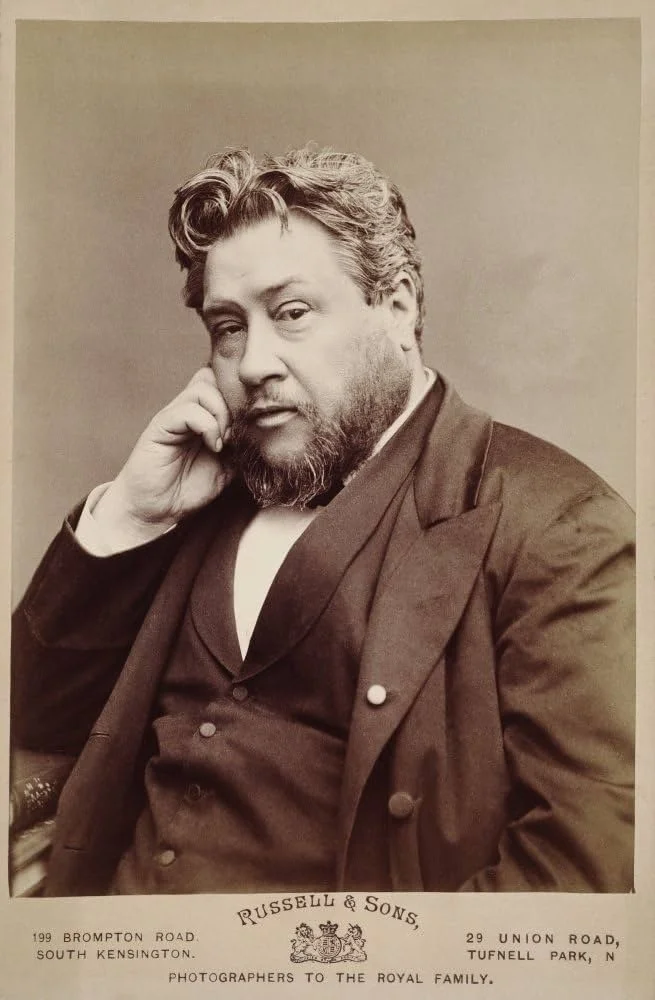
Charles Haddon Spurgeon (1834-1892) was a Reformed Baptist preacher who pastored Metropolitan Tabernacle in London for 38 years; often referred to as “The Prince of Preachers”.
Benefit #8: You experience Christ as your most treasured possession (when there is no where else to turn).
Indeed, I count everything as loss because of the surpassing worth of knowing Christ Jesus my Lord. For his sake I have suffered the loss of all things and count them as rubbish, in order that I may gain Christ. (Phil 3:8)
“You can never learn that Christ is all you need, until Christ is all you have.” – Corrie Ten Boom
Benefit #9: Suffering produces patience and an ability to wait on the Lord and his perfect timing.
My brethren, count it all joy when you fall into various trials, knowing that the testing of your faith produces patience. (James 1:2-3)
Benefit #10: You may learn to pray to God (a great gift!) in your sufferings (and perhaps we only really learn to pray in our helplessness).
In trials, you let your requests be known to God rather than living in anxiety (Phil 4:6). Requests to God, arising from our afflictions, are to be brought to God with thanksgiving: “give thanks in all circumstances; for this is the will of God in Christ Jesus for you” (1 Thess. 5:18).
“Trials are intended to make us think, to wean us from the world, to send us to the Bible, to drive us to our knees.” – J.C. Ryle

John Charles Ryle (1816-1900) was an English Evangelical Anglican clergyman best known for his book entitled Holiness (1879).
Benefit #11: You learn to be content in all circumstances (Phil 4:11-12).
I am not saying this because I am in need, for I have learned to be content whatever the circumstances. I know what it is to be in need, and I know what it is to have plenty. I have learned the secret of being content in any and every situation, whether well fed or hungry, whether living in plenty or in want (Phil 4:11-12, NIV).
Benefit #12: You experience the “beatitude blessing of Jesus” in persecution.
Blessed are you when others revile you and persecute you and utter all kinds of evil against you falsely on my account. Rejoice and be glad, for your reward is great in heaven, for so they persecuted the prophets who were before you (Matthew 5:11-12; see also 2 Timothy 3:10-12)
To listen to the March 29, 2026 sermon entitled “Per Crucem Ad Lucem - Through the Cross to the Light” click here.
“The darker the night, the brighter the stars; the deeper the grief, the closer is God!”