Life, Faith, and Level 3 Autism
Our youngest son, Tristan Noel, was born in Edinburgh, Scotland 12+ years ago. Our lives have been upended almost constantly since his diagnosis with autism 9 years ago. We moved continents (from Central Africa to Central Florida), changed callings (from missionary to pastor), and initially shed crocodile tears upon hearing the diagnosis of autism that would forever transform our lives.
We’ve lived through different seasons of Tristan’s compulsions: from the Lego Batman phase (my personal favorite) to the “not getting in the car without a fight” phase to the ripping paper phase (which included dozens of books in our home) to the peeling phase (which eventually required us to repaint our house exterior because he peeled off layers of paint) to the clogging the toilet phase (my least favorite phase – by far!) to the constantly digging in the sand phase (at the present time). When one compulsion ends, another one inevitably begins. All the compulsions seem to come with their own unique set of stressors.
Tristan has level 3 autism. “I have stage 4 cancer,” a brother-in-Christ recently told me, “and there isn’t a stage 5.” This is like the autism spectrum scale. Tristan has level 3 autism, and there isn’t a level 4.
The Autism Speaks website reads: “In 2013, the American Psychiatric Association released the fifth edition of the Diagnostic and Statistical Manual of Mental Disorders (DSM-5), the handbook used to diagnose mental disorders, including autism. The DSM-5 introduced three ASD levels of severity: level 1 (“requiring support”), level 2 (“requiring substantial support”), and level 3 (“requiring very substantial support”).
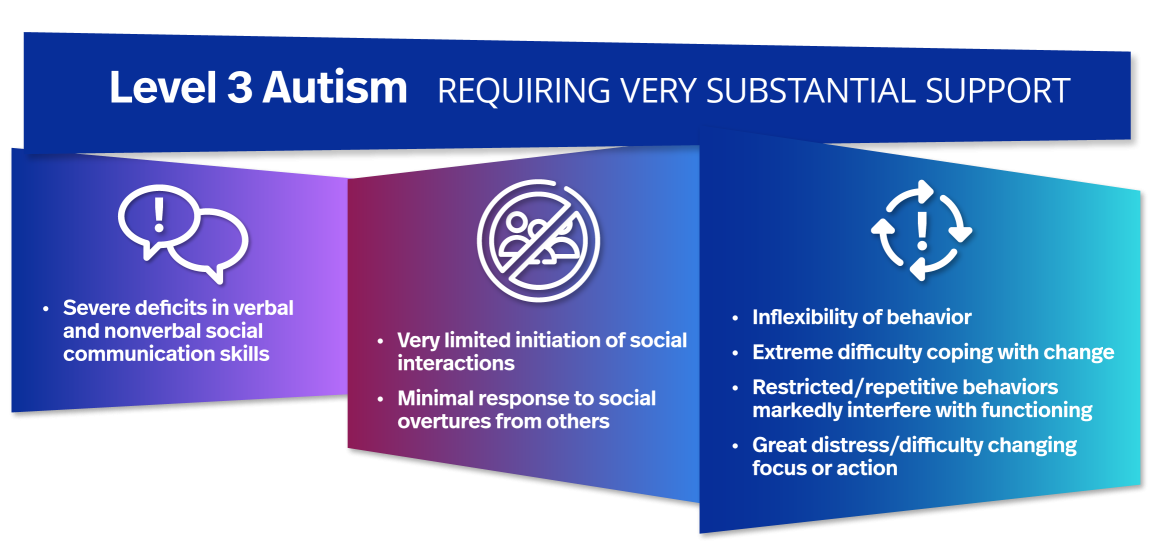
Tristan is severely limited verbally. He can make his wishes known verbally (mostly) but has little interest in engaging in open-ended conversations. He can follow fairly complex directions (“Tristan, get a new toilet paper roll beneath the sink.”); he loves to take out the trash (“Okay Tristan, you can put the trash into the green trash can outside”); he loves to help take in the groceries (though sometimes potatoes go into the freezer and tooth paste into the refrigerator). He is “above average” with coping with change for level 3 autism because he is easy going and relationally compliant. Yet, when he goes into his “compulsions,” he cannot remotely follow our directions and all “reasoning with” Tristan goes for naught.
Over the years, we’ve heard a myriad of “unhelpful” things about autism:
“Every kid with autism is incredibly smart in some way.” For us, Tristan’s extremely limited IQ poses constant stressors for everyday life. Autism’s hidden “smartness” never comes across in our home life with any frequency whatsoever.
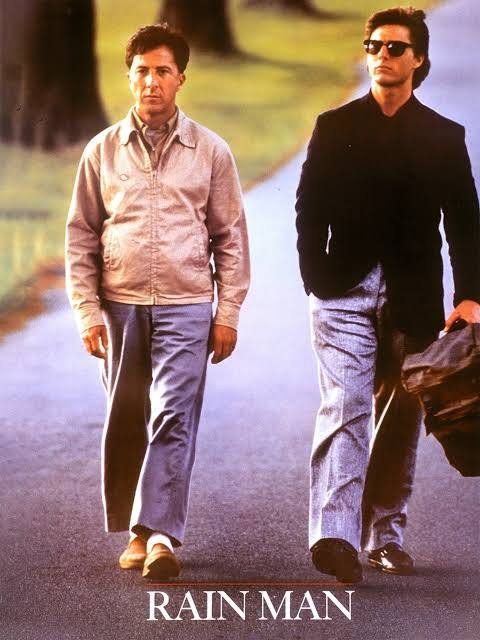
“Every kid with autism has superhero powers.” While Dustin Hoffman’s performance in the movie Rain Man was Oscar-worthy, the movie undoubtedly put “special abilities” and “autism” in the same sentence in a very unhelpful (and stereotypical) way that is not reflective of the lives of millions of kids and people with autism, especially the more severe “Level 3 Autism”.
“Have you tried this or that supplement or this or that diet or this or that cure?” Most parents with autism would have already tried “the cure” if one were readily available. All the antidotes about “curing” autism are exactly that – antidotes (at best) or promoted by charlatans (at worst). It’s extremely frustrating for autism parents for people to offer advice about cures for autism.
“Did you get vaccinated or take Tylenol during pregnancy?” Lisa – alongside millions of other mothers – never took Tylenol during her pregnancy. But here we are with Level 3 Autism. It was heartbreaking hearing stories of kids with autism asking their mothers: “Mom, did you take Tylenol and make me autistic?” A lack of wisdom with that discussion at the level of the federal government was pathetic and shameful. To date, there is no known “cause” or “cure” of autism.
Caregiving for Tristan is constant. Chaos reigns in inexplicable ways in our home. My wife is often under extreme duress. “Only by the grace of God” can aptly be applied to caregiving families.
There is beauty in the midst of the chaos. God is working in our midst, yet I’ll be the first to admit that I am often blind and deaf to the ways of God working through autism because of the constant unsolvable problems that it brings into our home. “Lord, give me ‘eyes to see’ and ‘ears to hear’ you moving in our midst!”
I am extremely grateful for Lisa. She loves Tristan fiercely and deeply with a strength of character and love that comes from her Heavenly Father. I am extremely proud of our eldest son, Kenyon, for his availability and willingness over the years to babysit Tristan and thereby gift us with a life together outside our home. I am extremely amazed by the kindness and gentleness of our middle son, Jackson, for his “arm around the shoulder’ of Tristan leading him around places like church and caring for him with such tenderness. I pray that Tristan’s Level 3 Autism makes all of us “love one another deeply, from the heart” (1 Peter 1:22) - both our own family and others.
Last week: a spiritual breakthrough. I was tucking Tristan into bed when the following conversation occurred. Remember: Tristan is very limited verbally and not often prone to answering open-ended questions (especially the third question).
Dad: “Tristan, who loves you?”
Tristan: “Daddy wuves [loves] me.”
Dad: “Who else loves you?”
Tristan: “Jesus wuves me.”
Dad: “How does Jesus love you?”
Tristan: “Died on the cross.”
The third response brought a couple tears to my eyes. Afterwards, I went into the living room to share with Lisa: “Tristan said that Jesus ‘died on the cross’ when I asked him ‘How does Jesus love you.’”
“Stop it. Don’t joke around.”
“Honey, I’m not joking.”
Lisa: “That’s a spiritual breakthrough.”
Providentially, we had lately been discussing whether and when Tristan might take the Lord’s Supper with the body of Christ. Could he – at his level – somehow understand what it was all about? Could he recognize the symbols? Could he understand the cross of Jesus?
After all, Tristan has grown up hearing about Jesus. We talk about Jesus at home, and he hardly misses a worship service. Tristan occasionally sways to the praise music and often claps (when others do) during the service. One of the hardest things about being a father to Tristan is not being able to hear Tristan’s thoughts. Does Tristan understand more than he can verbally process and communicate to us? It seems like he might.
Tristan is 12 years old yet two-year old toddlers talk circles around him. For all these reasons and more, I am so very thankful that Matthew, Mark, and Luke all included the story of our Savior who, with such love and tenderness, gathered the little children unto himself, saying: “Let the little children come to me.” I have no doubt that if Tristan was a part of that crowd of children on that first-century day, Jesus would have certainly singled Tristan out for love and affection. That’s the kind of love that naturally flows from our Savior’s heart.
Then children were brought to him that he might lay his hands on them and pray. The disciples rebuked the people, 14 but Jesus said, “Let the little children come to me and do not hinder them, for to such belongs the kingdom of heaven.” 15 And he laid his hands on them and went away. – Matthew 19:13-15
Jesus understands Tristan. Jesus loves Tristan. And for that, I’m extremely grateful.