
Per Crucem Ad Lucem: Suffering in the Apostle Paul

To listen to the March 29, 2026 sermon entitled “Per Cruce Ad Lucem - Through the Cross to the Light”, click here.

“Suffering is not evidence of God’s absence, but of God’s presence, and it is in our experience of being broken that God does his surest and most characteristic salvation work. There is a way to accept, embrace, and deal with suffering that results in a better life, not a worse one, and more of the experience of God, not less. God is working out his salvation in our lives the way he has always worked it out—at the place of brokenness, at the cross of Jesus, and at the very place where we take up our cross.”

– Eugene Peterson, Embracing Brokenness

Per Crucem Ad Lucem is a Medieval Latin phrase meaning “Through the cross to the light”. During the middle ages, it was a Christian axiom signifying that suffering, sacrifice, or hardship (the cross) leads to redemption, godliness, enlightenment, and spiritual joy (the light). Per Crucem Ad Lucem represents the spiritual journey and pilgrimage from Good Friday to Easter Sunday.

In Philippians 1:29, Paul writes: “ For it has been granted to you that for the sake of Christ you should not only believe in him but also suffer for his sake.” Paul frequently addresses the theme of suffering in his letters.

In our suffering, we often reach for the hardest and most unanswerable question of them all: WHY? “Why is God doing this? Why is this happening in my life?” Quite frankly, you can get lost in the “Why Question”. You can descend down this rabbit hole like Alice in Wonderland, never to emerge again!

Over the years, I have come to believe that the better question is not “Why?” but “What?” “What is God doing?”

[Of course, the best response to trials and sufferings is simply to put one faithful foot of obedience in front of the other. Honestly, you often only know “The What?” of suffering after the trial ends — and even that is still often hidden from you. (Sometimes, no question — however cleverly or carefully worded — seems capable of bearing the full weight of the chaos and disappointments of living in this fallen, broken world.)]

In 2006, John Piper wrote a blog post, which eventually became a book, entitled “Don’t Waste Your Cancer”. If beauty and benefit can emerge from trial and suffering, like the medieval axiom suggests, what are those benefits of light that God may shine into our lives? What do we find in Paul (and a few other places) about the WHAT of suffering?

I believe it is wise to ask: “What is God — typically — up to in our suffering and trials?” “What does the Bible say?” “What does the apostle Paul say?” If the Bible tells you WHAT God is (typically) doing in suffering and trials, we would be wise to pay attention.

Benefit #1: In our suffering, grace is experienced as sufficient (2 Cor. 12:7-10).

And lest I should be exalted above measure by the abundance of the revelations, a thorn in the flesh was given to me, a messenger of Satan to buffet me, lest I be exalted above measure. Concerning this thing I pleaded with the Lord three times that it might depart from me. And He said to me, "My grace is sufficient for you, for My strength is made perfect in weakness." Therefore most gladly I will rather boast in my infirmities, that the power of Christ may rest upon me. Therefore I take pleasure in infirmities, in reproaches, in needs, in persecutions, in distresses, for Christ's sake. For when I am weak, then I am strong. (2 Cor. 12:7-10)

Benefit #2: You experience the strengthening of Christ in your sufferings (Phil 4:12-13).

I know how to be brought low, and I know how to abound. In any and every circumstance, I have learned the secret of facing plenty and hunger, abundance and need. I can do all things through Christ who strengthens me. (Phil 4:12-13)

Benefit #3: You recognize, in suffering, that the Weight of Glory in Heaven towers infinitely high above any earthly suffering because you begin to anticipate release and freedom from the brokenness of this life rather than making this earth your home (Rom 8:18; 2 Cor. 4:17-18).

For I consider that the sufferings of this present time are not worthy to be compared with the glory which shall be revealed in us. (Romans 8:18)

For our light affliction, which is but for a moment, is working for us a far more exceeding and eternal weight of glory, while we do not look at the things which are seen, but at the things which are not seen. For the things which are seen are temporary, but the things which are not seen are eternal. (2 Cor. 4:17-18)

Benefit #4: The Gospel is adorned and goes forth in power precisely in our sufferings.

But I want you to know, brethren, that the things which happened to me [namely his imprisonment in Rome] have actually turned out for the furtherance of the gospel (Phil 1:12)

Now I rejoice in my sufferings for your sake, and in my flesh I am filling up what is lacking in Christ's afflictions for the sake of his body, that is, the church (Col. 1:24; see also 2 Cor. 6:4-7)

Benefit #5: You are conformed to the person of Jesus Christ in your sufferings and made ready for the Kingdom of God.

The Spirit himself bears witness with our spirit that we are children of God,  and if children, then heirs—heirs of God and fellow heirs with Christ, provided we suffer with him in order that we may also be glorified with him. (Rom 8:16-17)

that I may know him and the power of his resurrection, and may share his sufferings, becoming like him in his death (Phil 3:10)

strengthening the souls of the disciples, encouraging them to continue in the faith, and saying that through many tribulations we must enter the kingdom of God. (Acts 14:22. see also 2 Thess 1:5)

Benefit #6: You learn obedience through hardship and suffering by continuing to walk in simple obedience.

though He was a Son, yet He learned obedience by the things which He suffered. (Heb 5:8)

Benefit #7: Your inner man (your heart and your guts) is being renewed each day by the Living God in strength, in faith, and in godliness.

Therefore we do not lose heart. Even though our outward man is perishing, yet the inward man is being renewed day by day. (2 Cor. 4:16)

  • “Do you want to be holy? Then you will suffer.” – John Stott

  • “I am certain that I never did grow in grace one half so much anywhere as I have upon the bed of pain.” – Charles Haddon Spurgeon
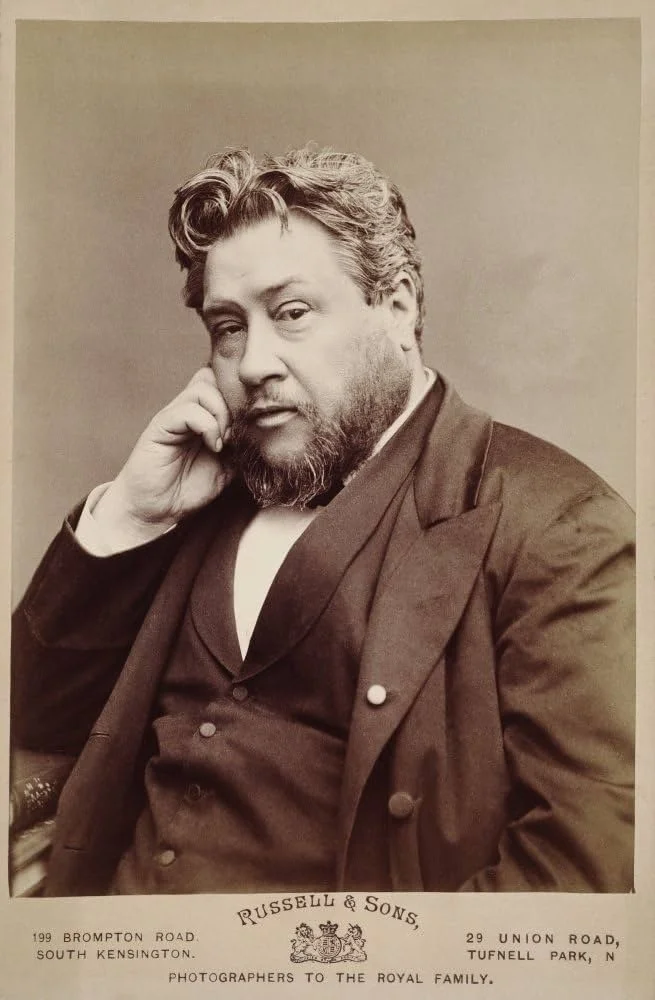
Charles Haddon Spurgeon (1834-1892) was a Reformed Baptist preacher who pastored Metropolitan Tabernacle in London for 38 years; often referred to as “The Prince of Preachers”.

Benefit #8: You experience Christ as your most treasured possession (when there is no where else to turn).

Indeed, I count everything as loss because of the surpassing worth of knowing Christ Jesus my Lord. For his sake I have suffered the loss of all things and count them as rubbish, in order that I may gain Christ. (Phil 3:8)

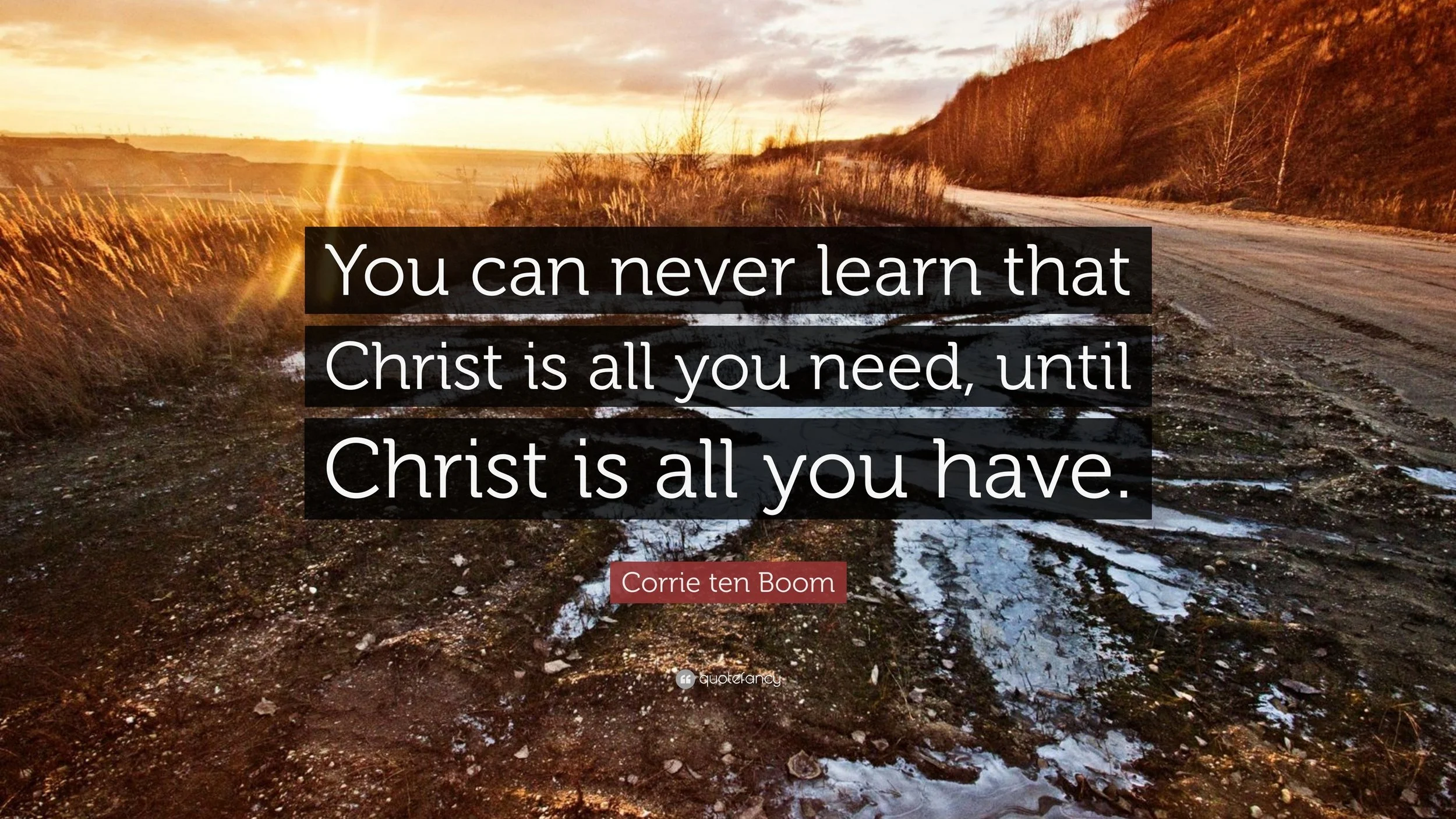
  • “You can never learn that Christ is all you need, until Christ is all you have.” – Corrie Ten Boom

Benefit #9: Suffering produces patience and an ability to wait on the Lord and his perfect timing.

My brethren, count it all joy when you fall into various trials, knowing that the testing of your faith produces patience. (James 1:2-3)

Benefit #10: You may learn to pray to God (a great gift!) in your sufferings (and perhaps we only really learn to pray in our helplessness).

In trials, you let your requests be known to God rather than living in anxiety (Phil 4:6). Requests to God, arising from our afflictions, are to be brought to God with thanksgiving: “give thanks in all circumstances; for this is the will of God in Christ Jesus for you” (1 Thess. 5:18).

  • “Trials are intended to make us think, to wean us from the world, to send us to the Bible, to drive us to our knees.” – J.C. Ryle
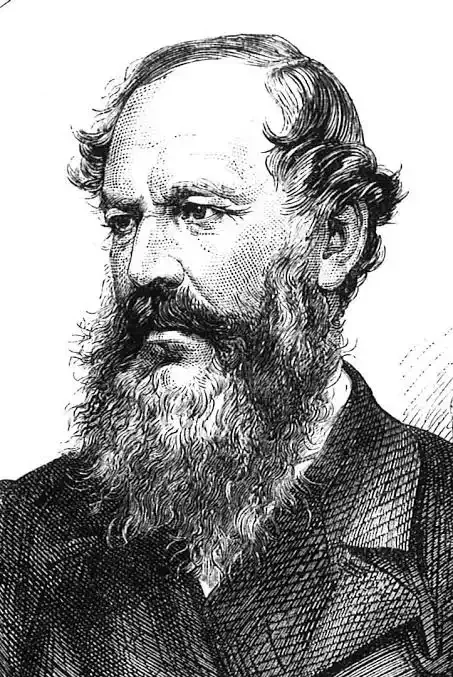
John Charles Ryle (1816-1900) was an English Evangelical Anglican clergyman best known for his book entitled Holiness (1879).

Benefit #11: You learn to be content in all circumstances (Phil 4:11-12).

I am not saying this because I am in need, for I have learned to be content whatever the circumstances. I know what it is to be in need, and I know what it is to have plenty. I have learned the secret of being content in any and every situation, whether well fed or hungry, whether living in plenty or in want (Phil 4:11-12, NIV).

Benefit #12: You experience the “beatitude blessing of Jesus” in persecution.

Blessed are you when others revile you and persecute you and utter all kinds of evil against you falsely on my account. Rejoice and be glad, for your reward is great in heaven, for so they persecuted the prophets who were before you (Matthew 5:11-12; see also 2 Timothy 3:10-12)

To listen to the March 29, 2026 sermon entitled “Per Crucem Ad Lucem - Through the Cross to the Light” click here.

“The darker the night, the brighter the stars; the deeper the grief, the closer is God!”
– Apollon Maykov (frequently attributed to Fyodor Dostoevsky in Crime and Punishment; the poet Maykov was a close friend and contemporary of Dostoevsky)

Jason Carter
Church: A Training and Equipping Station

In a recent sermon, I indicated my hope for Trinity Wellsprings Church over the next five years: that our church would increasingly become a central hub of training and equipping. Here’s the vision simply stated:

People increasingly come to our campus to get Trained & Equipped for life-giving ministry, and our vision for deep discipleship is increasingly coupled with a telos (purpose/goal) that places people on a pathway for ministry, whether that ministry is serving sacrificially in the church or being “salt” and “light” (Mt. 5:13-16) in the neighborhood, workplace, and community.

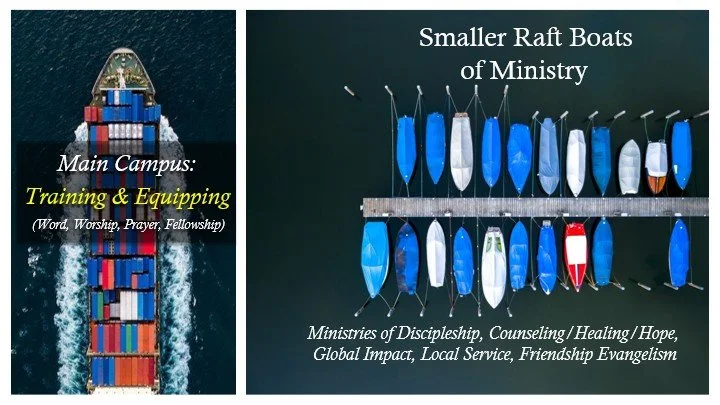
On the Main Campus: we focus on studying and applying the Word of God to our lives– not only to grow in the faith but also to become an instrument in the hands of the Redeemer and a channel of grace and blessing to those around us. On campus, we worship together, we pray together, we sit under the preached Word of God, we experience a surplus of joy and love as we fellowship together. Our lives are changed by experiencing the simple rhythms of grace – worship, prayer, scripture, relationship – all focused on Jesus.

What eventually happens in the training and equipping station? Little life-boats of ministry get launched out for ministry!

As people experience the “deep discipleship” of Jesus at Trinity – they are filled up with worship, prayer, community, and the scriptures – we are increasingly sent out as ambassadors of the gospel. People increasingly sense a confidence that they have been trained and equipped for life-on-life gospel ministry. People are sent out as ambassadors of biblical counsel, ambassadors of global impact and local service, ambassadors of outreach and friendship evangelism, ambassadors of reading the Bible one-on-one with people far from God, and ambassadors of healing and hope. YOU become one of the many life-boats of ministry launching out from the mother ship of Trinity.

I believe this is the pattern we see in the life and ministry of Jesus. Jesus did not teach the Word of God for his disciples’ heads simple to swell up with more and more knowledge (a bloated-head kind of discipleship). The goal of Jesus’ ministry was not to draw big crowds that never went out to proclaim the hope and grace of the Kingdom of God (a consumer-based, entertainment-style ministry).

In Matthew 4:19, Jesus is walking by the Sea of Galilee, and he gives a paradigmatic discipleship call which rings true for all believers in every church, in every culture, and in every generation (not only for Simon Peter and his brother Andrew in the first century): “Follow me, and I will make you fishers of men.”

The paradigmatic discipleship call of Jesus entails two great ends:

1)     Follow Jesus. The disciples were to keep close to Jesus by observing his rhythms and habits of life. They learned how to live in the Kingdom of God by applying the scriptures to their lives (Matt 5-7). They sought to embrace a life of prayer (“Lord, teach us to pray,” Luke 11:1). From the early church, we understand that the disciples learned from Jesus great compassion and love for the lost (Acts 2:38-41; 3:1-10; 9:32-43; 20:18-21) and cared for the poor and the widows in remarkable ways (Acts 4:32-35; 6:1-6).

2)     Become Fishers of Men. The disciples were to live a life of ministry. Their discipleship had a telos. In educational circles we would say that their discipleship education produced the learning outcome of a life of ministry. In business circles, we would say that they re-invested the profits (of discipleship) back into the business to strengthen it and to promote its future growth. Becoming fishers of men was built into the very fabric of being a disciple by Jesus. Becoming a “fisher of men” was the understood and necessary by-product of agreeing to apprentice under Jesus the Messiah.

May our church be stamped profoundly by the call of Jesus: deep discipleship (“Follow me”) paired with life-on-life ministry (“and I will make you fishers of men”).

Jason Carter
Life, Faith, and Level 3 Autism

Our youngest son, Tristan Noel, was born in Edinburgh, Scotland 12+ years ago. Our lives have been upended almost constantly since his diagnosis with autism 9 years ago. We moved continents (from Central Africa to Central Florida), changed callings (from missionary to pastor), and initially shed crocodile tears upon hearing the diagnosis of autism that would forever transform our lives.

We’ve lived through different seasons of Tristan’s compulsions: from the Lego Batman phase (my personal favorite) to the “not getting in the car without a fight” phase to the ripping paper phase (which included dozens of books in our home) to the peeling phase (which eventually required us to repaint our house exterior because he peeled off layers of paint) to the clogging the toilet phase (my least favorite phase – by far!) to the constantly digging in the sand phase (at the present time). When one compulsion ends, another one inevitably begins. All the compulsions seem to come with their own unique set of stressors.

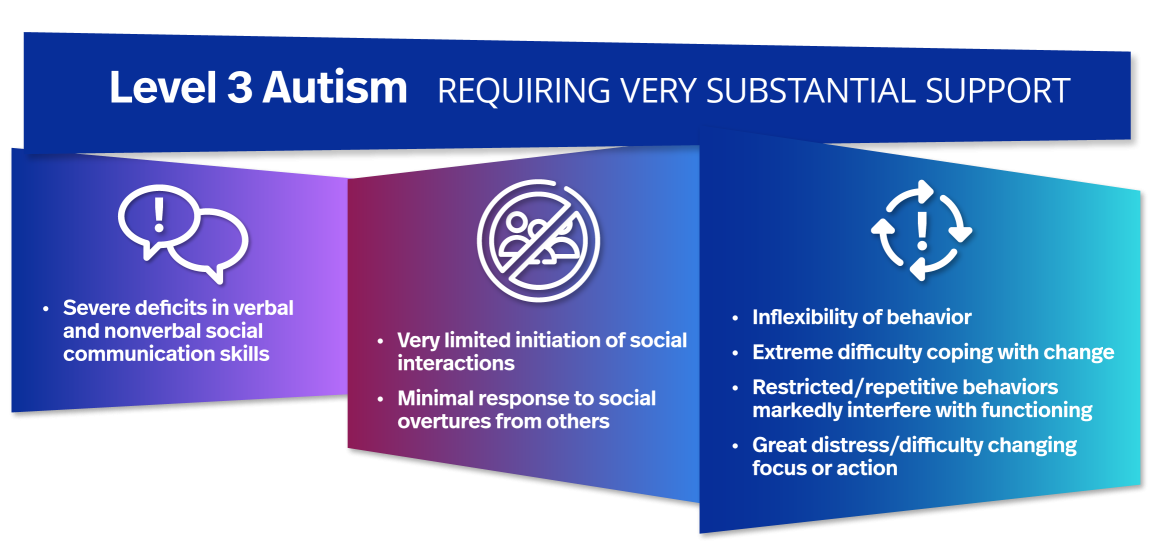
Tristan has level 3 autism. “I have stage 4 cancer,” a brother-in-Christ recently told me, “and there isn’t a stage 5.” This is like the autism spectrum scale. Tristan has level 3 autism, and there isn’t a level 4.

The Autism Speaks website reads: “In 2013, the American Psychiatric Association released the fifth edition of the Diagnostic and Statistical Manual of Mental Disorders (DSM-5), the handbook used to diagnose mental disorders, including autism. The DSM-5 introduced three ASD levels of severity: level 1 (“requiring support”), level 2 (“requiring substantial support”), and level 3 (“requiring very substantial support”).

Tristan is severely limited verbally. He can make his wishes known verbally (mostly) but has little interest in engaging in open-ended conversations. He can follow fairly complex directions (“Tristan, get a new toilet paper roll beneath the sink.”); he loves to take out the trash (“Okay Tristan, you can put the trash into the green trash can outside”); he loves to help take in the groceries (though sometimes potatoes go into the freezer and tooth paste into the refrigerator). He is “above average” with coping with change for level 3 autism because he is easy going and relationally compliant. Yet, when he goes into his “compulsions,” he cannot remotely follow our directions and all “reasoning with” Tristan goes for naught.

Over the years, we’ve heard a myriad of “unhelpful” things about autism:

  • “Every kid with autism is incredibly smart in some way.” For us, Tristan’s extremely limited IQ poses constant stressors for everyday life. Autism’s hidden “smartness” never comes across in our home life with any frequency whatsoever.

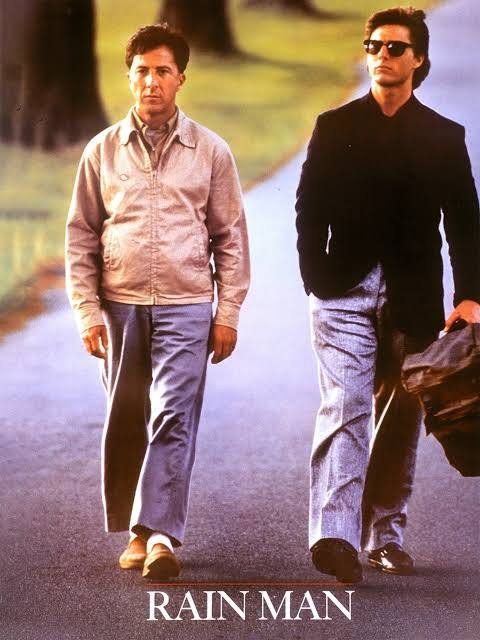
  • “Every kid with autism has superhero powers.” While Dustin Hoffman’s performance in the movie Rain Man was Oscar-worthy, the movie undoubtedly put “special abilities” and “autism” in the same sentence in a very unhelpful (and stereotypical) way that is not reflective of the lives of millions of kids and people with autism, especially the more severe “Level 3 Autism”.

  • “Have you tried this or that supplement or this or that diet or this or that cure?” Most parents with autism would have already tried “the cure” if one were readily available. All the antidotes about “curing” autism are exactly that – antidotes (at best) or promoted by charlatans (at worst). It’s extremely frustrating for autism parents for people to offer advice about cures for autism.

  • “Did you get vaccinated or take Tylenol during pregnancy?” Lisa – alongside millions of other mothers – never took Tylenol during her pregnancy. But here we are with Level 3 Autism. It was heartbreaking hearing stories of kids with autism asking their mothers: “Mom, did you take Tylenol and make me autistic?” A lack of wisdom with that discussion at the level of the federal government was pathetic and shameful. To date, there is no known “cause” or “cure” of autism.

Caregiving for Tristan is constant. Chaos reigns in inexplicable ways in our home. My wife is often under extreme duress. “Only by the grace of God” can aptly be applied to caregiving families.

There is beauty in the midst of the chaos. God is working in our midst, yet I’ll be the first to admit that I am often blind and deaf to the ways of God working through autism because of the constant unsolvable problems that it brings into our home. “Lord, give me ‘eyes to see’ and ‘ears to hear’ you moving in our midst!”

I am extremely grateful for Lisa. She loves Tristan fiercely and deeply with a strength of character and love that comes from her Heavenly Father. I am extremely proud of our eldest son, Kenyon, for his availability and willingness over the years to babysit Tristan and thereby gift us with a life together outside our home. I am extremely amazed by the kindness and gentleness of our middle son, Jackson, for his “arm around the shoulder’ of Tristan leading him around places like church and caring for him with such tenderness. I pray that Tristan’s Level 3 Autism makes all of us “love one another deeply, from the heart” (1 Peter 1:22) - both our own family and others.

Last week: a spiritual breakthrough. I was tucking Tristan into bed when the following conversation occurred. Remember: Tristan is very limited verbally and not often prone to answering open-ended questions (especially the third question).

Dad: “Tristan, who loves you?”

Tristan: “Daddy wuves [loves] me.”

Dad: “Who else loves you?”

Tristan: “Jesus wuves me.”

Dad: “How does Jesus love you?”

Tristan: “Died on the cross.”

The third response brought a couple tears to my eyes. Afterwards, I went into the living room to share with Lisa: “Tristan said that Jesus ‘died on the cross’ when I asked him ‘How does Jesus love you.’”

            “Stop it. Don’t joke around.”

            “Honey, I’m not joking.”

            Lisa: “That’s a spiritual breakthrough.”

Providentially, we had lately been discussing whether and when Tristan might take the Lord’s Supper with the body of Christ. Could he – at his level – somehow understand what it was all about? Could he recognize the symbols? Could he understand the cross of Jesus?

After all, Tristan has grown up hearing about Jesus. We talk about Jesus at home, and he hardly misses a worship service. Tristan occasionally sways to the praise music and often claps (when others do) during the service. One of the hardest things about being a father to Tristan is not being able to hear Tristan’s thoughts. Does Tristan understand more than he can verbally process and communicate to us? It seems like he might.

Tristan is 12 years old yet two-year old toddlers talk circles around him. For all these reasons and more, I am so very thankful that Matthew, Mark, and Luke all included the story of our Savior who, with such love and tenderness, gathered the little children unto himself, saying: “Let the little children come to me.” I have no doubt that if Tristan was a part of that crowd of children on that first-century day, Jesus would have certainly singled Tristan out for love and affection. That’s the kind of love that naturally flows from our Savior’s heart.

Then children were brought to him that he might lay his hands on them and pray. The disciples rebuked the people, 14 but Jesus said, “Let the little children come to me and do not hinder them, for to such belongs the kingdom of heaven.” 15 And he laid his hands on them and went away. – Matthew 19:13-15

Jesus understands Tristan. Jesus loves Tristan. And for that, I’m extremely grateful.

Jason Carter
On Living in a Digital Babylon

In a recent sermon, I highlighted the disturbing sociological research coming out of the Barna Group, namely, that the typical adult spends between 6 and 7 hours per day, of their leisure time, on their digital devices! That’s up to 49 hours a week!

David Kinnaman, President of the Barna Group, in his work Faith for Exiles, coined the term “Digital Babylon” in which he compares the impact of our screen time to the ancient Jewish experience of living as exiles amidst a foreign, pluralistic, and overwhelmingly pagan city like Babylon.

Kinnaman is warning the church: the vast amount of time you spend on digital devices is teaching and training you who you are to be, what you are to think, and how you are to live in this new Digital Babylon.

Digital Babylon is after your discipleship! Silicon Valley’s overarching goal is to make you a disciple of their screens. The new technology of the age is not only informing you but radically shaping you and discipling you in various ways!  

The role that parents, teachers, coaches, youth pastors, and spiritual directors might have played 50 years (or even 500 years) ago are now being exchanged in favor of Digital Screens. The results have been disastrous. Western culture is awash in mental health problems and severely handicapped in maintaining healthy relationships across all generations, most acutely affecting younger generations (aka “the digital natives”).

Sociological research tells us that our culture is witnessing:

  • a widespread epidemic of loneliness and depression,

  • a wave of heightened forms of chronic anxiety which debilitates us,

  • shallower sleep patterns which affect our bodies, and

  • decreased attention spans which affects our minds (just to name a few).

That is, the consequences of capitulating to Digital Babylon shows up in body, soul, mind, and strength – the very aspects of our personhood from which we are called to love God and love others. Critical aspects of our personhood are being discipled – and compromised by – our capitulation to this Digital Babylon.

Bed Rotting: A New Phenomenon?

“Bed rotting” is now part of the American experience in this Digital Babylon. The vocabulary of bed rotting is already in the lexicon of college-aged students and young adults. Last week, I asked a college student: “Do you know what bed rotting is?” The college student replied: “Yeah, we talk about it all the time.”

Bed rotting is simply spending long stretches in bed with no physical activity, scrolling on digital devices.

Here are the harrowing statistics on bed rotting in our culture:

  • Gen Z spends 21 days per year bed rotting.

  • The Average American spends 15 full days bed rotting.

  • 57% of Americans have taken a PTO or Sick Day to bed rot.

Gen Z was most likely to bed rot in the evening while afternoon bed rotting was most common amongst Baby Boomers.

If you want to dig further into the phenomenon of “bed rotting” as part of our experience in an Age of Digital Babylon, you might want to read: “The Rise of Bed Rotting: How and Why Americans are Doing It.”

I find the sociology both fascinating and disturbing, at once a wake-up call and a solemn warning for Christians seeking to navigate this cultural moment in the 21st century.

The Challenge for Christians

Christians have only two choices: be conformed to this world or be transformed by the renewing of your mind (Rom 12:1-2) by being people who “Push Back” against this Digital Babylon in being “People of the Word”.

Here’s the solemn conclusion:

If you cannot name the real and tangible ways that you are intentionally “pushing back” against the Digital Babylon of our age, then it’s probable that you are being conformed to this world.

How are you pushing back and living with intentionality? 

Do you need to take a long “fast” (break) from social media?

Do you need to eliminate Netflix (or other steaming services)?

Do you need to get serious about internet filters and/or an accountability partner to deal with sexual struggles and addictions?

Here’s my favorite counsel: Put the Word before the World.

In the morning, before you are ambushed by the onslaught of the world (by reaching for a digital screen), go to the Word (The Bible and Prayer) as a way of intentionally pushing back against Digital Babylon. At night, finish the day in prayer and with a Psalm instead of falling asleep to a digital screen.

Paul encouraged the Colossians to “let the word of Christ dwell in you richly” (Col 3:16). The word of Christ - alone - has the power to push back against Digital Babylon and fortify your life with the only story worthy of our lives.

Jason Carter
Best Books that I Read in 2025

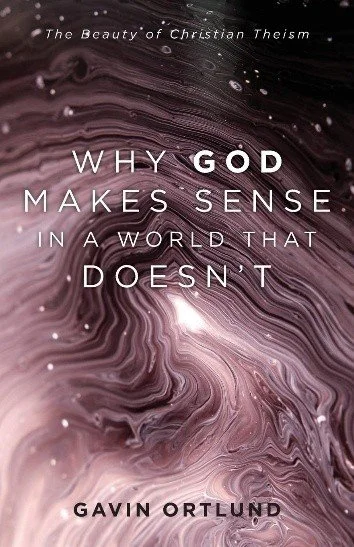
What’s going on with the Ortlund family? Other than the magisterial Jesus as the Victory of God by N.T. Wright, Dane Ortund’s Gentle & Lowly: The Heart of Christ for Sinners and Suffers is my favorite book on Jesus. His brother, Gavin Ortlund, has also written one of the best apologetical books that I’ve ever read. Why God Makes Sense in a World that Doesn’t was my absolute favorite book that I read in 2025.

Ortlund sets up his apologetic shop at the intersection of beauty and truth: “Beauty is a powerful tool for…apathy because it has a kind of persuasive power that reaches down to the heart,” (pp. 7). In short, the book taps into the longing for beauty inside every human heart. By narrative story-telling, Ortlund describes the truth of Christianity wherein people, even outside the faith, might say: “I want this to be true. I ache for this to be true, because this Christian vision of a life with God is so beautiful and compelling.” This is an apologetic that is a far cry from the arid “5 Proofs of God” but rather a compelling invitation to “taste and see” that the Lord is good.

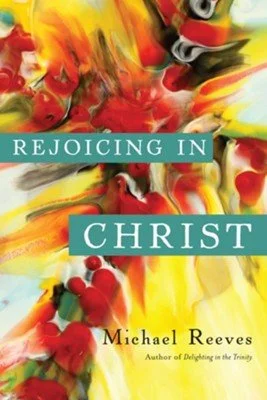
2.     Rejoicing in Christ, Michael Reeves

This is a beautifully written book on Christology that will accompany our sermon series “The Incomparable Christ” via a Church Wide Study guide written by our own Rev. Mike Elmer.

Simply put, my soul was profoundly moved by Rejoicing in Christ. It caused me to worship. It caused me to stand amazed and contemplate – in awe – Christ’s person. I believe this book will cause you to want to follow Christ with your whole heart, soul, mind, and strength. I cannot recommend this book enough!

Michael Reeves tackles a theological topic – Christology – in a way that reads more like a sermon than a book. Pithy. Profound. Unforgettable. You will enjoy this book. It will be good for your soul.

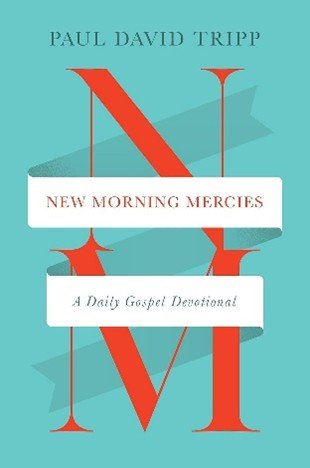
3.     New Morning Mercies: A Daily Gospel Devotional, Paul David Tripp

A simple, gospel-centered devotional that is not all fluff and flowers but rings with the truth of the gospel, sings with practical ways to live out the faith, and frequently calls for heartfelt repentance and confession of sin that warms the heart towards God? Sign me up!

If you utilize this devotional, you will have the affections of your heart stirred for Jesus Christ. New Morning Mercies is the best daily devotional book that I’ve ever read.

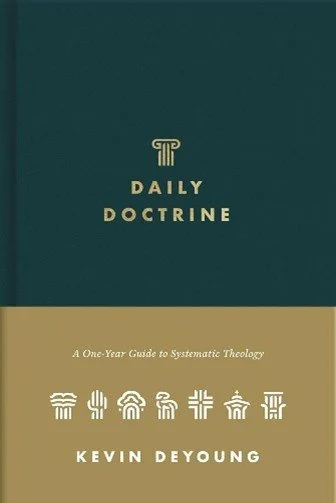
4.     Daily Doctrine: A One-Year Guide to Systematic Theology, Kevin DeYoung

Want to sharpen your theology but not yet up for tackling thousands of pages of theology? Daily Doctrine offers a succinct summary of all the major loci of theology. I am still enjoying this theology refresher alongside New Morning Mercies. Reading both these books together captures the head and the heart in wonderful ways!

Each “daily doctrine” consists of only about 500 words which compels DeYoung to give concise explanations of complex theological doctrines. With 260 entries, Daily Doctrine a joy to read.

Reading Hint: If this is your first attempt at systematic theology, I’d suggest potentially skipping the first major section of “Prolegomena”.

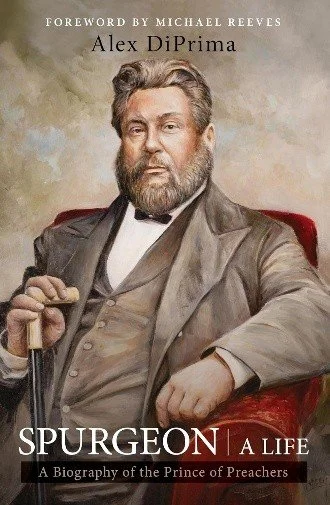
5.     Spurgeon: A Life, by Alex DiPrima

A fascinating biography of one of the greatest preachers the English language has ever witnessed. The book is replete with edifying lessons of faith from the life of Charles Spurgeon (aka “The Prince of Preachers”) without neglecting the history of his life and times.

For Spurgeon, you might imagine that his pastoral life went from mountaintop to mountaintop as he oversaw one of the most explosive periods of Protestant growth in the history of the city of London at Metropolitan Tabernacle. Not so fast. Spurgeon was attacked by the press, fought with “wild beasts” within the church (like the apostle Paul in Ephesus), and suffered from kidney disease, rheumatism, and frequent bouts of the gout which made him often fight for his faith through these seasons of “melancholy” and “the dark night of the soul”. 

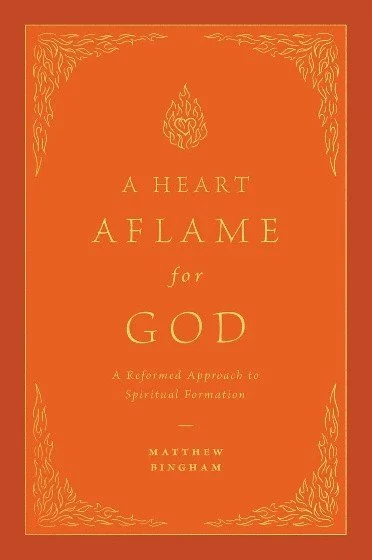
6.     A Heart Aflame for God: A Reformed Approach to Spiritual Formation, Matthew Bingham

Our staff is reading together A Heart Aflame for God at my encouragement. Undoubtedly, the book will vie for numerous Christian book awards at the end of the year, as it was published in 2025.

What does spiritual formation mean? How can you “keep your heart” warm and alive towards God? Bingham highlights what he calls the “Reformation triangle” of Bible reading, meditation, and prayer which are at the heart of the Reformed vision of spiritual formation. For the last 50 years, evangelical have typically sought resources outside the Reformed tradition to do spiritual formation’s heavy lifting, yet Bingham argues that the Reformed stream of spirituality is more than up to the task! This is a book of robust theological retrieval of Puritan authors, where you feel power of the Reformed vision of spiritual formation by having your own heart strangely warmed by the Lord in your pursuit of the spiritual life.

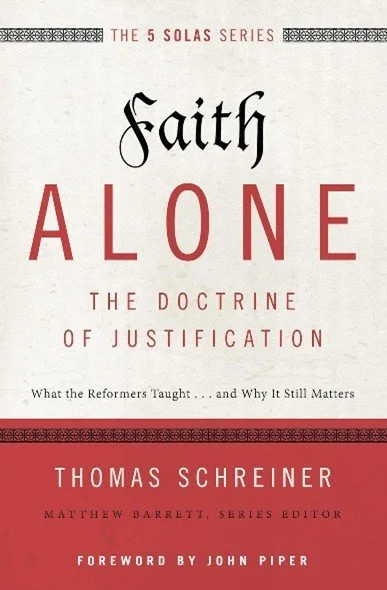
7.     Faith Alone, Thomas Schreiner

In 2017, a series of five books on the 5 Solas of the Reformation were released to celebrate the 500th anniversary of the Protestant Reformation as Martin Luther nailed the 95 Thesis to the Door of Wittenberg Castle Church. Faith Alone is the best book, by far, in the series. Respected New Testament scholar, Thomas Schreiner, provides simple clarity and helpful historical background while providing his prototypical careful exegetical insights of key New Testament texts. I maintain that the “5 Solas” embody the most succinct expression of Reformed theology, and “faith alone” is a great place to start (i.e. 5 Solas = salvation is by grace alone through faith alone in Christ alone according to the scripture alone to the glory of God alone).

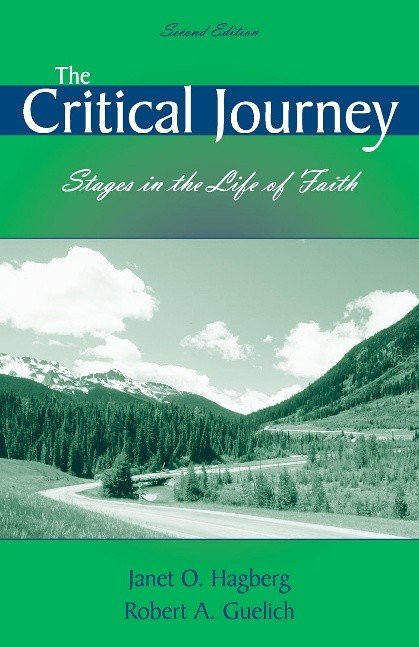
8.     The Critical Journey: Stages in the Life of Faith, Hagberg and Guelich

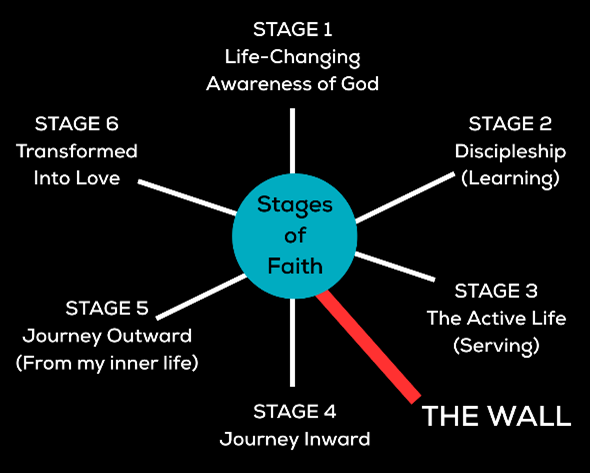
I preached on Breakthrough: The Journey through the Wall in the series “How do People Change?” The six stages of faith come from The Critical Journey: Stages in the Life of Faith. It’s a helpful framework-type of book which helpfully identifies and gives voice to the experiences of Christians at each stage of faith. The Critical Journey provides “next steps” for people “who have gotten “stuck” at “The Wall” or at various stages of the life of faith. As long as you recognize that the book tilts more towards sociology than biblical theology, you can appreciate the book for what it is.

9.     The Valley of Vision (A Puritan Prayer Book)

I came back to using The Valley of Vision regularly again in 2025. The Puritan Prayer book serves me by priming the pump for my own prayers. Do you ever wake up groggy? Overwhelmed? Not feeling like you want to pray? On those days, I begin with The Valley of Vision before I open the Bible, and these biblically rich and theological robust prayers suddenly jump-start my own prayer life in wonderful ways. The Valley of Vision is a wonderful resource to keep next to your Bible.  

(Hint: The Leather Bound edition is well-worth the money.)

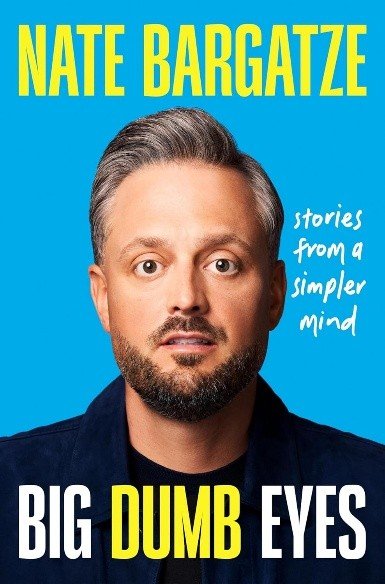
10.  FUN BOOK: Big Dumb Eyes: Stories from a Simpler Mind, Nate Bergatze

A very funny book by comedian Nate Bergatze.

For a long time, my favorite comedian has been Brian Regan. I still believe the best hour of comedy on YouTube is “I walked on the moon” by Regan; his clip of the differences between men and women is hilarious. Nate Bergatze’s clip of time travel is memorable and funny; his bit about trying to check-in at the airport is fun times; Washington’s Dream at SNL was an instant classic. In Big Dumb Eyes, you can definitely hear his distinctive comedic voice coming through the stories he tells. It was a fun page-turner to wind down the night.

Jason Carter
Christianity and the Public Square

The last three months have seen assassinations, inexplicable violence, and a maelstrom of bewildering emotions and vehement responses cutting across the geographic, cultural, and social media landscape of our divided country.

Charlie Kirk’s assassination (Sept 10) at Utah Valley University.

Evergreen High School shooting (Sept 10) near Denver left 1 dead and 2 wounded.

Annunciation Catholic School shooting (Aug 27) in Minneapolis left two children dead and 21 people injured, including 18 school children.

Iryna Zarutska (Aug 22), Ukrainian immigrant, was killed on Charlotte’s public transportation.

Minnesota State Representative Melissa Hortman and husband Mark were assassinated (June 14) in their home outside of Minneapolis.

The two words that have come to my mind in these last days, weeks, and months are “madness” and “evil”. Violence has a long history, winding all the way back to the Bible’s second generation when Cain killed Abel. One of the best titled books on the doctrine of sin comes from Cornelius Plantinga, Jr. entitled “Not the Way It’s Supposed to Be”. These last three months have increasingly felt like “not the way it’s supposed to be”.

Three short phrases are rattling around in my soul at the present moment.

(1) Evil is a reality. (2) Lament is a necessity. (3) Jesus is still our only hope.

Evil is a reality. As Andrew Delbanco writes, “A gulf has opened up in our culture between the visibility of evil and the intellectual resources available for coping with it.” I am thankful that our Christian tradition has the resources for naming evil, identifying evil, and (ultimately) triumphing over evil because of the cross of Christ. Our secular neighbors, bereft of the Christian story of redemption, have a much harder time coping with the basic storyline and complex plot of evil in our world. I wish that our culture would take the advice of Charles Haddon Spurgeon when he succinctly suggested, “Of two evils, choose neither.” Yet, that is not the reality of our world. Evil is an ever-present reality in our world.

I don’t know about you, but I am definitely having a hard time wrapping my mind and heart around the madness and the violence and the evil that is taking place in our country. Friends, this is precisely the nature of evil! The nature of evil is inexplicable. Think of the sudden appearance of the serpent (Satan) in the Garden of Eden. How did he get there? In the middle of God’s good creation? In the middle of Paradise? It’s one of the biggest mysteries of the entire Bible, right up there with the Trinity and the Virgin Birth. Evil is a reality yet often inexplicable by its very nature. So you are not alone in being saddened, bewildered, and upset. This is not the way it’s supposed to be.

Lament is a Necessity. I actually preached on lament on June 8, 2025 with these words:

“Why should you embrace the prayer of lament in your life? Because if you don’t suffer in a biblical way, you will suffer in a secular way. You will stuff the suffering down deep into your soul (until it eventually explodes out onto others). Or, you will flit around on the surface and shallowness of life.”

Lament is not despair. Lament is not crying into the void. Lament is bringing our pain, our sadness, our grief, and our questions before God in prayer. Lament prayers engage in a “piety of protest” for justice and healing and the reign of God not to tarry. Lament is a necessity when we see evil encroaching into our world.

“Lament is a prayer in pain that leads to trust” (Mark Vroegop). I find myself thinking: “Yes, that’s what I want to do, O Lord, in the midst of evil.” I want to establish a posture of prayer in my life that leads to greater trust in the Sovereign God of Love!

If that’s what you long for, I encourage you to lament:

Lament before you scroll. Lament before you post. Lament before you open your mouth. Lament before you go to see where the latest cultural battle lines are being drawn up on social media. Lament before you watch your favorite TV talk show host.

Friends, evil is increasingly becoming a social media phenomenon. So guard your soul. Pray before you scroll. Do you hear me? Pray before you scroll, especially when evil abounds.

Jesus is still our only hope. “God did not abolish the fact of evil: He transformed it. He did not stop the Crucifixion; He rose from the dead” (Dorothy L. Sayers). The victory of Jesus on Calvary’s cross is God’s  gigantic “NO!” to the evil in our world. Evil will cease. Tears will be wiped away. Death is on a short leash held by God. Yet, as we live “in between the times” – we wait.

But here’s the deal: we wait with hope!

Jesus will reign. Jesus will be victorious. Jesus is still our only hope.

That’s a truth that brings rest to my soul. That’s a truth that brings freedom from “trying to figure it all out”.

In my bewilderment. In my righteous anger. In my compassion fatigue. In my conversations with friends. Jesus is still my only hope. That’s a truth that I can take all the way to the bank of eternity.

So friends: do not lose hope. Jesus is still reigning and ruling!

Rev. Dr. Jason Carter

 ****

P.S. In October and November, the pastoral staff at Trinity will be offering a class entitled “Christianity and the Public Square”. See the details below.

Christianity and the Public Square

Community Hour (10:15 – 11:00)

9 Weeks | Sundays in October & November | Seminar Room

Purpose:

  1. Expand our understanding of the biblical and theological basis for Christianity’s role in the public square, including our winsome engagement with our post-Christendom culture as a Jesus follower.

  2. Increase (and practice) our ability to engage others with kindness, understanding, civility, charity, and love with those who disagree with our beliefs on politics and socio-cultural issues with a view towards re-establishing the church as a community which models honest dialogue full of grace and truth for a watching world. We will practicing “hugging it out” at the end of our dialogues together!

  3. Become conversant with a few frameworks and paradigms for understanding the Christian’s engagement in the public square with a view towards talking winsomely about the cultural stumbling blocks in our divided age with grace and truth.

OCT 5: Framework Building Block #1: Christianity and Culture

OCT 12: Framework Building Block #2: Four Approaches to Race, Politics and Gender | The Carter Framework for “This Cultural Moment”

OCT 19: What is a Healthy Patriotism as a Christian? What is Christian Nationalism? (Round #1)

OCT 26: Social Media and the Public Square

NOV 2: What is a Healthy Patriotism as a Christian? What is Christian Nationalism? (Round #2)

NOV 9: Loving Our Enemies | The Sermon of the Mount Applied

NOV 16: A Short History of Revival: Theology, Themes, and Traits

NOV 23: The New Sexual Revolution: A Way Forward with Grace and Truth

NOV 30: Race & the Bible: A Beginning Word on Racial Tensions, Immigration, and the Call of the Christian

Jason Carter